

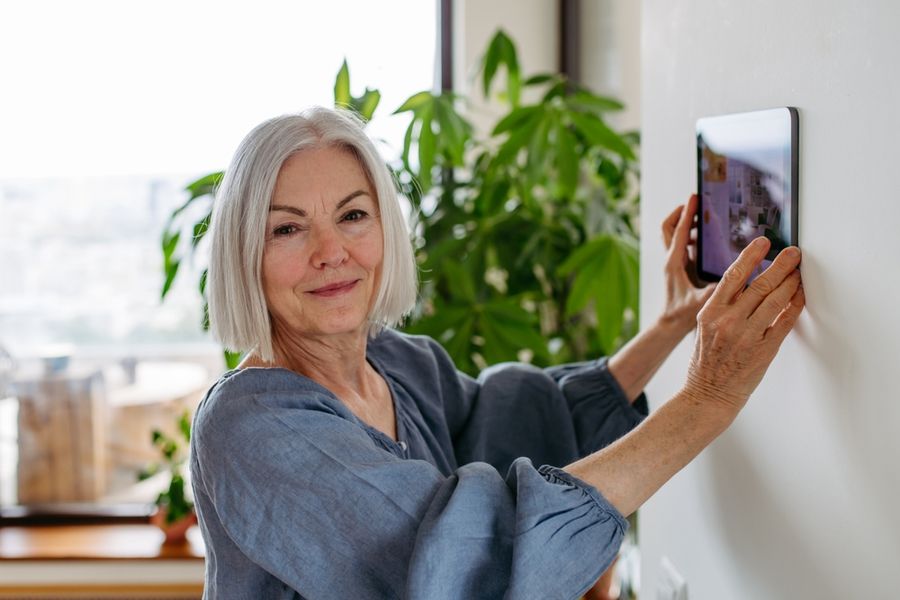
Aging in place allows older adults to remain in familiar surroundings while maintaining independence and established routines. However, everyday activities such as adjusting the thermostat, answering the door, and navigating dark hallways may become more challenging over time. Smart home technology offers practical solutions that can make everyday tasks easier without requiring extensive renovations. From voice-controlled assistants to automated lighting and safety sensors, certain devices can improve convenience and support household safety.
1. Smart Speakers and Displays for Hands-Free Assistance
Smart speakers and displays can help older adults manage everyday tasks without relying on small buttons or complicated smartphone menus. Devices such as Google Nest Hub allow users to interact with compatible home technology through spoken commands, making them particularly useful for individuals with limited dexterity or mobility.
For example, users can set recurring alarms for daily activities, check upcoming calendar appointments, and control compatible smart home equipment. A Nest Hub can also provide accessibility features such as screen magnification, spoken feedback, and display adjustments for people with visual impairments.
When choosing a device, consider microphone performance, display readability, and compatibility with existing equipment. Remember that general-purpose smart speakers are not substitutes for dedicated medical alert systems, and emergency assistance features may require additional services.
2. Motion-Activated Smart Lighting for Safer Movement
Navigating a dark hallway or bathroom at night can be difficult for older adults with reduced vision or balance. Smart lighting equipped with motion sensors offers a convenient way to illuminate frequently used areas without searching for wall switches.
The Philips Hue Motion Sensor, for example, can activate compatible lights when movement is detected. Its settings allow users to customize brightness according to the time of day, making it possible to create softer nighttime lighting and brighter illumination during daytime activities.
Consider installing motion-triggered lights along hallways, near staircases, and between bedrooms and bathrooms. Position sensors where normal movement will activate them reliably. Smart lighting complements other fall-prevention measures, including secure handrails, clear walkways, and appropriate flooring.
3. Smart Door Locks for Easier Home Access
Traditional door locks can become inconvenient for people experiencing arthritis, reduced grip strength, or difficulty handling small keys. Smart locks offer alternative ways to secure and enter the home, often using numerical codes or smartphone applications.
The Yale Assure Lock 2 series includes models that support programmable entry codes, allowing homeowners to provide access to trusted relatives or caregivers without distributing physical keys. Certain configurations also offer automatic locking and remote-access capabilities, depending on their connectivity equipment.
Before purchasing, check that the lock fits the existing door and supports the functions you need. Battery replacement, internet requirements, and backup entry methods deserve particular attention. For older adults who receive regular assistance, individually assigned access codes can simplify visits while helping maintain control over who enters the home.
4. Smart Thermostats for More Convenient Temperature Control
Adjusting household temperatures can be inconvenient when a thermostat is difficult to reach or its controls are hard to read. Smart thermostats offer alternative control methods and can maintain comfortable temperatures according to household routines.
For example, compatible ecobee smart thermostats allow users to establish different temperature settings for daytime, nighttime, and periods away from home. These schedules reduce the need for repeated manual adjustments. Certain models can also automatically respond to whether the home is occupied.
Older adults may appreciate being able to adjust temperatures from a smartphone rather than walking to a wall-mounted thermostat. However, compatibility with the home's heating and cooling equipment should be confirmed before installation. Simple controls and a reliable manual override are especially important when internet service is interrupted.
5. Smart Plugs for Controlling Everyday Appliances
Smart plugs can turn ordinary electrical devices into remotely controlled accessories. They fit between an electrical outlet and a compatible appliance, allowing users to manage power through an application, voice commands, or automated schedules.
The Eve Energy smart plug, for example, supports compatible voice controls and scheduling features. Homeowners could use it to switch on a living room lamp in the evening or activate a suitable fan according to a daily routine.
These devices may be particularly helpful for lamps with difficult-to-reach switches. However, smart plugs must be used within their electrical ratings and should not control appliances that could become dangerous if activated unexpectedly. Avoid using them with space heaters or other high-risk heating equipment unless the appliance manufacturer explicitly permits that application.
6. Smart Water Leak Detectors for Early Warnings
Unexpected plumbing leaks can create substantial household problems, especially when water accumulates in areas that aren't regularly inspected. Smart water leak detectors can provide early warnings when moisture appears near vulnerable fixtures or appliances.
The Eve Water Guard uses a sensing cable to detect water and activates an audible alarm and flashing warning light when a leak occurs. With an appropriately configured compatible system, it can also send notifications to connected devices, including when the homeowner is away.
Consider placing leak sensors near washing machines, water heaters, and accessible plumbing connections. Choose products with alerts that are easy to hear or see, and determine whether remote notifications require additional equipment. These sensors cannot repair leaks, but earlier detection may allow homeowners or caregivers to respond before extensive damage develops.
Choosing Smart Home Technology That Supports Independence
Smart home devices can make aging in place more manageable by reducing everyday physical demands, automating routine tasks, and providing useful household alerts. However, the most valuable upgrades are those that address specific challenges rather than introducing unnecessary technological complexity.
Start with one or two devices that solve recognizable problems, such as nighttime lighting or difficult-to-reach controls. Prioritize straightforward operation, dependable connectivity, accessible interfaces, and ongoing technical support. Family members or caregivers can assist with setup while respecting the homeowner's privacy and independence.
With thoughtful selection and proper installation, smart home technology can become a practical addition to an aging-in-place plan, helping older adults remain comfortable and connected in the homes they know.