

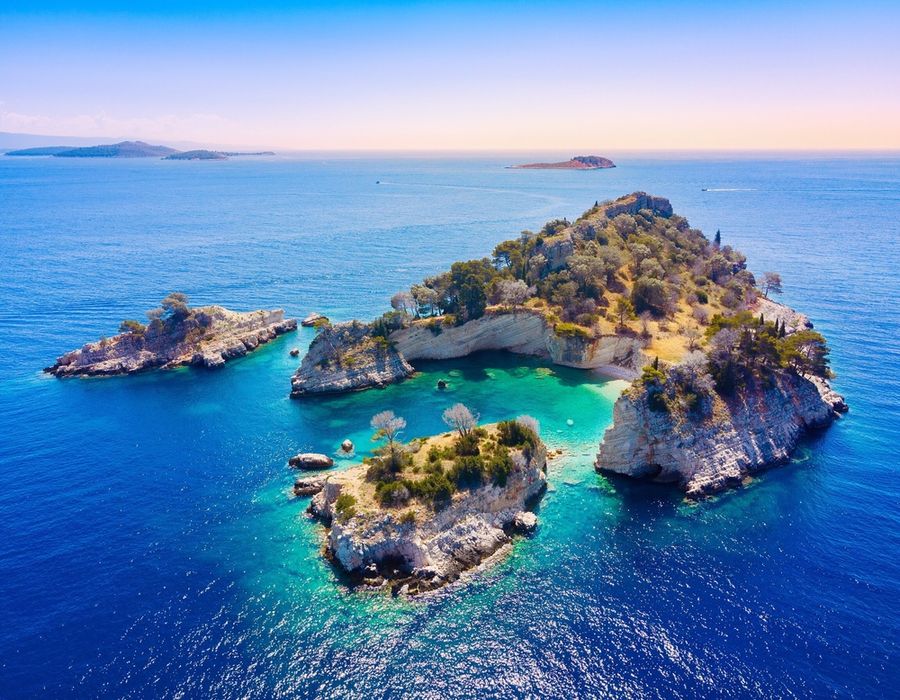
The Mediterranean is famous for destinations such as Santorini, Mallorca, and Capri, but its quieter islands can offer equally memorable experiences without the same emphasis on crowded attractions and nightlife. Scattered across Greece, Italy, Croatia, and Spain, many lesser-known escapes feature secluded coves, traditional villages, and remarkable natural landscapes. For Americans planning a relaxing European vacation, several islands offer appealing alternatives to the region's busiest resort destinations.
1. Folegandros, Greece: Dramatic Cliffs and Traditional Villages
Folegandros is a small Greek island in the Cyclades, offering rugged coastal scenery and traditional whitewashed architecture. Unlike some of its more famous neighbors, the island emphasizes simple pleasures, including wandering through village streets, enjoying seaside meals, and exploring relatively undeveloped beaches.
Its main settlement, Chora, occupies a dramatic position above the Aegean Sea. Visitors can explore narrow pedestrian streets, shaded squares, and traditional cafés before following the uphill path to the Church of Panagia for panoramic coastal views. Beaches such as Katergo and Livadaki appeal to travelers seeking clear water and natural surroundings, although some require hiking or boat transportation.
Folegandros has no airport, so visitors generally arrive by ferry from another Greek island or the mainland. Consider staying several nights rather than attempting a rushed day trip. Late spring and early autumn can be particularly attractive for travelers hoping to avoid the busiest summer period.
2. Lastovo, Croatia: A Remote Island Surrounded by Protected Nature
Lastovo lies in the southern Adriatic Sea and is an excellent destination for travelers who enjoy peaceful coastal villages, hiking, and relatively undeveloped landscapes. Much of the surrounding archipelago belongs to Lastovo Islands Nature Park, which protects islands, marine environments, and coastal habitats.
Visitors can explore the hillside settlement of Lastovo, known for its distinctive chimneys and historic buildings, or spend time around the sheltered bays of Zaklopatica and Skrivena Luka. Hiking trails and cycling routes provide opportunities to experience the island's interior, while boat excursions reveal nearby coves and smaller islands. The surrounding waters also attract snorkeling and diving enthusiasts.
Travelers can reach Lastovo through ferry and catamaran services connecting it with Split and other Adriatic destinations. Services vary seasonally, making advance transportation planning important. Staying near a coastal village can provide convenient access to swimming, restaurants, and boat excursions without an overly ambitious itinerary.
3. Pantelleria, Italy: Volcanic Landscapes and Natural Thermal Pools
Located between Sicily and Tunisia, Pantelleria offers a Mediterranean experience unlike the region's conventional beach destinations. Its volcanic origins have produced rugged black-rock coastlines, natural thermal springs, and distinctive landscapes shaped by centuries of agriculture.
One of the island's most unusual attractions is the Specchio di Venere, or Lake of Venus, a volcanic lake fed partly by thermal springs. Travelers can also explore the natural thermal pools at Gadir or visit the steam-filled Benikulà Cave. These geothermal features create opportunities for outdoor relaxation surrounded by dramatic scenery.
Accommodation is another distinctive feature. Traditional stone houses called dammusi, often characterized by thick walls and domed roofs, provide an alternative to conventional resort hotels. Pantelleria can be reached by air from Sicily or by ferry from Trapani. Renting a car is worth considering because attractions are dispersed across the island.
4. Alonnisos, Greece: Peaceful Beaches and Marine Wildlife
Alonnisos, part of Greece's Northern Sporades island group, combines pine-covered hillsides, clear coastal waters, and traditional villages. Its relatively relaxed atmosphere makes it appealing to travelers who prefer natural surroundings over elaborate resort entertainment.
The island is associated with the National Marine Park of Alonnisos–Northern Sporades, a protected environment that provides habitat for the endangered Mediterranean monk seal. Visitors can explore coastal scenery by boat, hike through forested areas, or spend an afternoon at one of the island's beaches. The old town, reached uphill from the port of Patitiri, offers stone houses, winding lanes, and impressive sea views.
Alonnisos doesn't have its own airport. One option is to fly to nearby Skiathos and continue by ferry. Travelers interested in marine wildlife should choose responsible boat operators that respect protected areas and maintain appropriate distances from animals. A stay of several days allows time for both inland exploration and coastal relaxation.
5. Formentera, Spain: Beautiful Beaches and Unhurried Island Life
Although Formentera is better known than some islands on this list, it remains an appealing alternative to neighboring Ibiza for travelers seeking a quieter atmosphere. The smallest of Spain's main inhabited Balearic Islands, it offers turquoise waters, sandy beaches, and relatively short distances between attractions.
Cala Saona provides a picturesque setting for swimming and relaxation, while the extensive shoreline of Migjorn offers opportunities to find less crowded stretches away from its busier sections. Visitors can also explore traditional villages, coastal lighthouses, and the island's network of cycling and walking routes.
Formentera has no airport, so visitors typically arrive by ferry from Ibiza. Renting a bicycle or using local transportation can make exploration straightforward. For the most peaceful experience, consider visiting outside the peak summer holiday period, when popular beaches and accommodations can become considerably busier.
Choosing the Right Mediterranean Island for a Relaxing Escape
Each of these islands offers a different interpretation of peaceful Mediterranean travel. Folegandros is ideal for dramatic landscapes and traditional Greek villages, while Lastovo appeals to nature enthusiasts. Pantelleria offers volcanic scenery and thermal experiences, Alonnisos emphasizes coastal wilderness, and Formentera provides accessible beaches and leisurely exploration.
For travelers departing from the United States, reaching these islands may require connecting flights, ferries, or additional ground transportation. Checking seasonal schedules and allowing adequate travel time can prevent unnecessary stress.
Ultimately, the most rewarding itinerary may involve choosing just one island and staying long enough to appreciate its character. Rather than rushing between attractions, leave room for spontaneous discoveries, quiet afternoons, and the slower rhythm that makes these Mediterranean destinations worth visiting.